Wednesday, 16 March 2022

Edward Handley, Willesden & Acton Brickworks & Woodside Brickworks, Croydon

In this post I first write about the brickworks that Lincoln brickmaker Edward Handley & his two brickmaking sons had an interest in, in Acton, Middlesex & then I write about son Edward Handley junior b.1866 moving to Croydon, Surrey to own a brickworks there. Edward Handley senior, born in 1836 in Ruddington, Notts. established & owned the Albion Brickworks in Lincoln from 1890 until his death in 1906, with his eldest son William b.1862 then taking over the Albion works until 1912, when it was sold to the Lincoln Brick Co. You can read more about the Albion Works, Lincoln on my East Midlands blog. I have also found Edward Handley senior owned shares in two other Lincoln brick companies, these being the Lincoln Brick Co. established around 1882 with works at Waddington & the Bracebridge Brick Co., established around 1876 with works in Bracebridge, Lincoln. This latter company was amalgamated into the Lincoln Brick Co. in 1889. So this post covers the Handley Family interests outside Lincoln starting in 1898.

With being in contact with the present Edward Handley b.1934, son of the second Edward b.1866 & grandson to the first Edward b.1836, Edward has supplied me with information & photos about his family's rich brickmaking past. However with his father dying when he was only 13, Edward's knowledge & recollections mainly centres on the Woodside works after he had been appointed to the Board as a Director in 1957. The family's business ultimately totalled three brickworks & was sold in November 1963 to Hall & Co. Many Thanks Edward for all your help.


Willesden & Acton Brickworks.
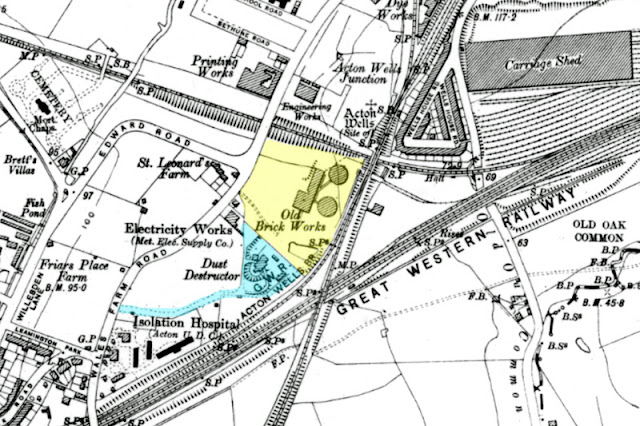


© Crown Copyright. Reproduced with permission of NLS/Ordnance Survey 1912.


This Willesden & Acton brickworks is recorded in two web articles as being established by Kellett & Sons, (Builders) in 1894 & operating until 1910, but there is a little more to add to this info because on the 11th of July 1898 when the Willesden & Acton Brick Co. was formed & registered with a capital of £50,000 in £10 shares, Edward Handley of the Albion Brickworks, Lincoln became a share holder. This share information comes from a newspaper notice which appeared in the Sheffield Independent dated Monday 18th of July 1898. Also listed as owning shares were A. Kellett, Edwards's sons, William & Edward junior & three more gentlemen who were Solicitors.

The 1901 census records Edward Handley junior as living with his second wife Mary Jane & daughter Mena aged 9 from his first marriage in Acton & a Brick Manufacturer/Employer, so it appears he was running the Acton Works for his father who is recorded in a 1902 newspaper article & at the time of his death in 1906 as the Managing Director of the Willesden & Acton Brick Co. In November 1905 the Middlesex & Surrey Express reported that Edward Handley, MD of the W. & A. Brick Company offered the council four acres of land next to his brickworks on which to build a Refuse Destructor & Edward would then purchase the power generated by the burning of the Council's refuse. If you look at the 1912 map above you will see that the Council took up Edward's offer & built their Destructor. 

This is were things get a bit hazy on what happened next. With Edward Handley senior passing away on the 26th Feb.1906 he made provisions in his Will for his two sons William & Edward junior to be able to purchase his shares in his Lincoln Albion Works & the Willesden & Acton Brick Co., but this appears not to have happened in the case of Edward junior who may have continued to run the Willesden & Acton brickworks until it's closure, but there is also the option that he left this works in 1906. I am assuming without Edward senior's financial backing the Willesden & Acton Brick Co. reverted back to the Kellett family hence the articles recording Kellett as the owners of the works when it closed in 1910. I next found in the London Gazette that the Willesden & Acton Brick Co. held a creditors meeting in November 1911, with the company being liquidated in 1913. Neither of these entries name the actual owners of this company. Up to yet, bricks stamped Willesden & Acton have still to turn up.

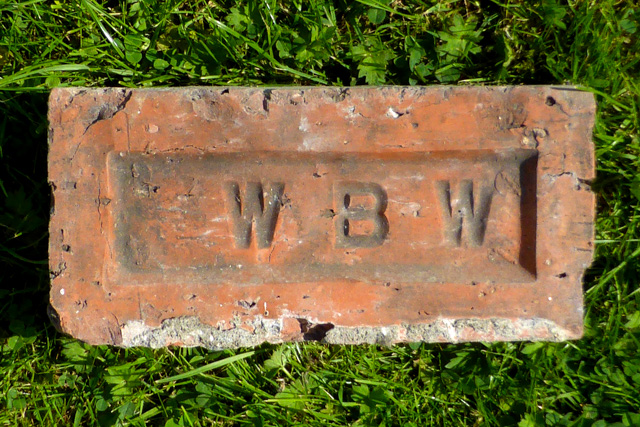
Willesden & Acton Works, courtesy of Edward Handley.


Woodside Brickworks, Croydon


Edward tells me that his father purchased this brickworks in 1910 or 1912 from the Executors of the late Horris Parks, however I have since found two newspaper articles which records Edward had established the Woodside Brick Co. in 1909. There is also the option that Edward may have been working for Horris Parks after leaving Acton sometime between 1906 & 1909, but Edward cannot verify this about his father with him being so young when his father died & not being told very much about his family's early brickmaking past. However it does appear Edward was in the right place at the right time when Parks tragically died to then take over the works which Edward was told was at a "knocked down price". So I first write about Horris Parks senior & his son Horris junior & how events lead to Edward junior acquiring this works which in 1909 now covered 46 acres. 
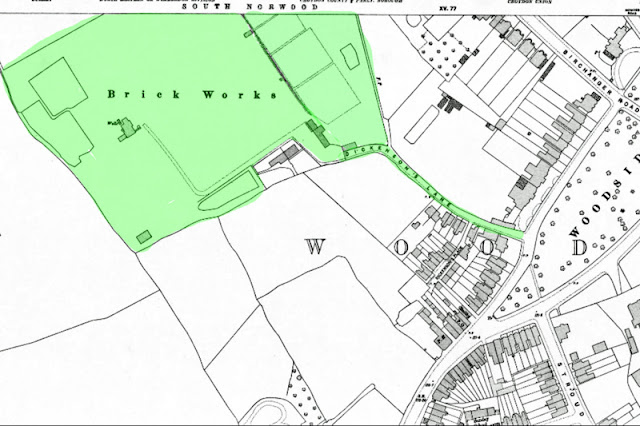

© Crown Copyright. Reproduced with permission of NLS/Ordnance Survey 1894.


The Surrey Advertiser dated 22nd July 1876 advertises a "Valuable Freehold Brickfield For Sale" amounting to nearly 10 acres at Woodside, Croydon & having an existing lease holder bringing in rent & royalties to the value of £150 per year, with this leaseholder being named as Horris Parks. Whether Horris Parks bought the Brickfield at this date is unknown. 


The 1851 census records Horris Parks senior b.1817 as a brickmaker & living on Whitehorse Road, Croydon, so from this information I am assuming Horris was leasing this Woodside Green works in 1851 with it being only a short distance from his home. The 1861 census records Horris Parks snr, a brickmaker, was now employing 6 men & 2 boys at his works & had moved to 3, Azaff Place, Croydon. Kelly's 1867 edition is the first trade directory entry recording Horris snr with his home address of Portland Road, South Norwood. The 1871 census records Horris snr was now employing 10 men & living at the same address. We also find at this same address was his son Horris Parks junior b.1845, single, who was also a brickmaker & employing 7 men & 2 boys. Now from a later trade directory entry I am taking it that Horris jnr was running a works situated on Mitchell Road, Croydon in 1871. Horris snr is again listed in Kelly's 1878 edition with the home address of Pembury Villa, Portland Road, South Norwood. Newspaper articles record Horris senior's works as the Parks Brickworks, Dickinson Place, Woodside & I have coloured Horris' works green on the 1894 OS map above. The 1881 census now records Horris snr as a retired brick manufacturer, so we know from at least 1881 that Horris jnr was also running the Dickinson Place works at Woodside Green. The 1881 census records Horris jnr was now employing 21 men & 10 boys. Horris jnr aged 42 married Constance Postam aged 32 on the 1st of June 1887 & they went on to have two boys & 1 girl, first living on Selhurst Road, Croydon & then moving to Tennison Road, Croydon. I have not been able to establish in which year Horris senior died. As mentioned earlier Kelly's 1891 edition records Horris Parks junior as operating a brickworks on Mitcham Road, Croydon & there is a newspaper article naming Horris jnr as still owning this works in 1908. 


Edward has a Parks brick which he found in the garden of the house where he lived with his mother after his father's death & this brick is shown next. 


Courtesy of Edward Handley. 

A 1900 description of the Dickinson Place works describes it had a 14 chamber Hoffman-type kiln with the capacity to produce 100,000 bricks per week & was erected by Messrs J. Osman & Co., a Wolff & Co. patented brick dryer & Fawcett wire-cut brickmaking machine. 


The 3rd of April 1909 was the day when events went tragically wrong for Horris Parks junior because he committed suicide by hanging himself with a new halter from a beam in one of his workshops at the Woodside works. The Coroners verdict of suicide whilst being of unsound mind was recorded. Apparently one of his foremen was caught "milking the books" & it is believed the shame of this act lead him to commit suicide. In his Will Horris left effects of £16,726 which in 1909 was a very large amount of money.  
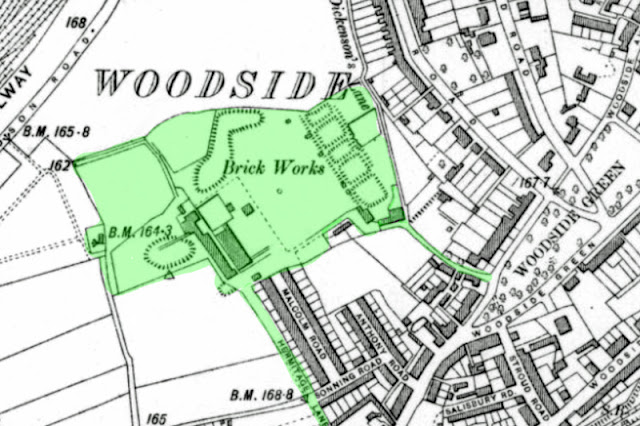

© Crown Copyright. Reproduced with permission of NLS/Ordnance Survey 1910.


So with Edward Handley purchasing this Woodside Green works in 1909 we find in newspaper articles & Kelly's Surrey 1911 & 1913 editions that Edward had named his company the Woodside Brick Company. This 1910 map shows a new entrance to the works had been created via Hermitage Lane. Example of one of Edward's bricks is shown next.
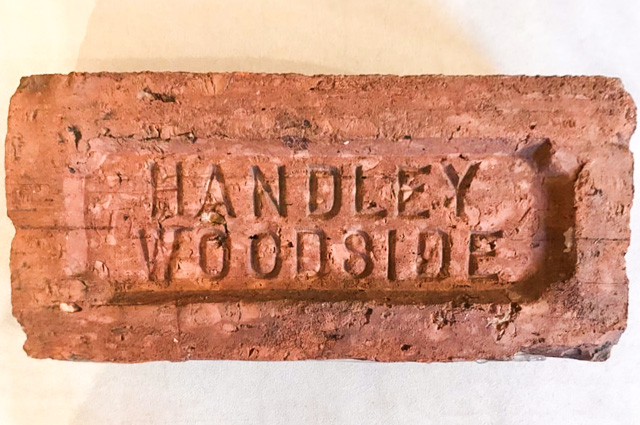

Courtesy of Edward Handley.


Edward Handley married three times with his first wife Elizabeth (nee Seaton) producing a daughter in 1892 called Mena. His second marriage to Mary Jane did not produce any children. Then shortly after the death of Mary Jane, Edward was driving his car through the portcullis at the entrance of his works when it came crashing down just missing the car by inches. This near death experience left Edward badly shaken & needing medical attention. It was while he was in Hospital that he met his third wife, Sister nurse Elizabeth May Casserley, who liked to be called Mollie. Mollie nursed Edward back to full health & love blossomed with the pair marrying at South Norwood Methodist Church in 1930. In December 1934 son Edward was born, Mollie was 32 & Edward was now 68. 


After surviving the 1930's Depression the Woodside brickworks prospered under Edward's guidance & Edward recalls that to his knowledge his father was the only local manufacturer to make facing bricks from the London blue clay which was found in the deepest part of the claypit. Above this blue clay was a different type of clay which was used to make yellow London stock bricks.


In September of 1939 under the orders of the Ministry of War & within a week Edward had to cease all brick production, extinguish all fires, empty all kilns of their bricks & make ready the works to accommodate soldiers & staff belonging to a Canadian army battalion. These troops were later involved in the Normandy Landings. In September 1944 a V1 (doodlebug) fell on the brickworks narrowly missing two chimneys & ending up in the water filled claypit where it exploded on impact, luckily no one was killed or seriously injured. Apparently the Germans got their location wrong as this bomb should have been aimed at Handley Page's aircraft works in Cricklewood, North London. Lord Haw-Haw announced on the radio that the bomb had successfully destroyed this aircraft works & this bemused it's owners & workers when they turned up at the works to assess the damage. However Handley's brickworks did suffer damage from the many bombing raids & one kiln was totally destroyed with another one being found to be beyond repair & had to be demolished. A total of 1,000 incendiary & H.E. bombs landed on the brickworks resulting in roofs being blown off, office windows smashed & machinery being destroyed. 


Edward Handley died on the 2nd of February 1946 & the rebuilding of the brickworks was placed into the hands of Trustees, Jack Milsted, Edward's widow, Mollie, daughter, Mena & three other Trustees who had been elected to administrate his estate after his death. Apparently in Edward's complicated Will, young Edward (13) was not named as his successor & was only named as a beneficiary, so Edward never got to fully own his father's business, however he did become a Director in 1957. 


So during the harsh winter of 1946/47, 250 workers set about re-building the brickworks & starting production again, which had now been re-named as the Woodside Brickworks (Croydon) Limited by it's Directors. Even with reduced capacity compared to pre-war levels the works managed to produce 500,000 bricks per week. The substantial amount of money needed to rebuild & restart the brickworks came from the Government's War Damage Commission. In turn this money originated from an agreement between US President Franklin D. Roosevelt & Winston Churchill using American money from the "Marshall Plan" to re-build Europe. Apparently the UK received the lions share of this money which amounted to 4.3 billion dollars & it took the UK Government 61 years to re-pay back this loan.
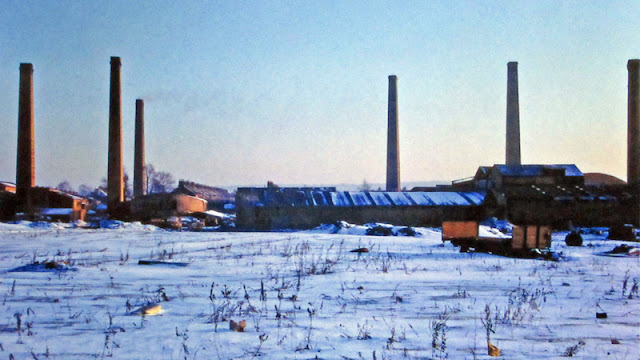

Photo by Edward Handley.

As you can see from Edward's photos the Croydon skies were dominated by the brickworks chimneys with one having Handleys Bricks emblazoned upon it made from Staffordshire white bricks. Although this photo only shows six chimneys the works had seven in total.

Photo by Edward Handley.

This brick is in a collection in Cambridge & was photographed by me.  

 This brick is in a collection in Birmingham & was photographed by me.  


The works consisted of three Staffordshire kilns & two Hoffmann kilns. Wire-cut bricks were made using Bennett & Sayer machinery & together with pressed bricks the works output amounted to seven & a half million bricks being produced in 1950. The claypit at this date was 80 feet deep. 
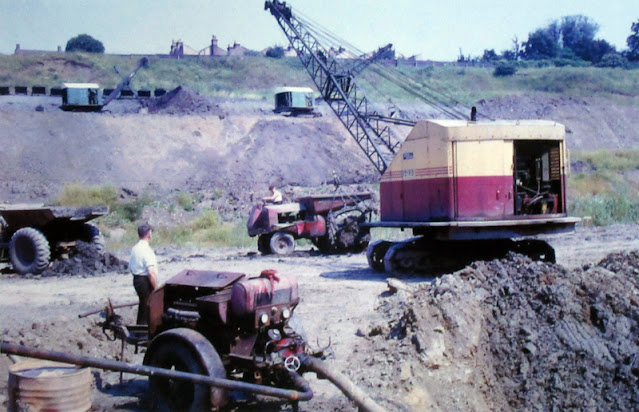

Photo by Edward Handley.

With profits now increasing Percy Davis became Joint Managing Director with Jack Milsted. Then in 1951 the Directors of Woodside took the opportunity to purchase the Newdigate Brickworks in Surrey for £50,000. This yard with a small workforce was only producing hand-made bricks from the Wealden clay, so with the 45 acre site having a huge reserve of clay to the depth of 200 feet, steps were taken to put in machines to increase production. A second brickworks owned by the Ashford Brick, Tile & Pottery Co. Ltd was purchased in 1961 for £80,000. Covering 20 acres this works had a 12 chamber continuous kiln producing 250,000 bricks per week. Both these purchases were made to help with the dwindling clay reserves at Woodside. 


In 1957 Edward, now aged 23 was elected to the board of Directors & was made responsible for the operations of the kilns together with Jim Cridge. After leaving school in 1952 Edward went on to study all aspects of clay & it's manufacture which included pottery, bricks, fire bricks & drain pipes at the College of Ceramics in Stoke on Trent. A further six months was spent at the Keymer Brick & Tile Co. in Burgess Hill, learning every job in the yard. Edward's final six months was spent at the Sneyd Brick Co. in Stoke.


Architects Standard Catalogue 1957 -59.


1959 was a bit of a crunch year for Edward & one he was not looking forward to with his father making the provisions in his Will that when he reached the age of 25 that he would as the Testator's son, distribute the quarter share which was due to his half sister Mena now aged 67. Mena made the decision that she wanted either cash or for someone to purchase her shares, but Edward was not in the financial position to do either, so it was stalemate for several years with the other Trustees not being able to see how the matter could resolved.


As I wrote clay reserves were starting to deplete at Woodside & between 1960 & 1963 London blue clay was brought to the works everyday by lorries which had been extracted while digging the Walthamstow to Victoria underground line. However there was much debris in this clay which included drift wood & pieces of metal & £70,000 was spent on new machinery to rid the clay of this debris. Common bricks were then made from this London blue clay & some of these bricks made their way back to the stations on the Victoria Line, but they are hidden behind the stations white ceramic tiles. Another temporary solution to keep the brickworks operational was to take the waste material (pulverised fuel ash) from Croydon B coal-fired power station (site now Ikea) which had sufficient carbon in it to help fire the bricks. 


With the winter of 1963 being a particular bad one & with brick sales being at an all time low, many avenues were explored on how Mena could receive her money from the Trust. After many schemes were considered by the Trustees, the London & Yorkshire Trust were instructed to offer the three brickworks for sale & they were bought by Hall & Co. in November 1963. With this sale Edward received his cash share from the Trust & Mena received hers. The remaining beneficiaries of the Trust are Edward’s three children who inherit the remainder of the Edward Handley Estate (Edward b,1866) after Edward’s death. All staff kept their jobs & were transferred over to Hall & Co. with the exception of Edward, he was the only one to be made redundant. 


Hall & Co. were a long standing South East family building supplies firm who continued to operate Handley's three works until 1972 when Hall & Co. now a public limited company was purchased by Ready Mixed Concrete. Then in 1976 Ready Mixed Concrete took the decision to sell it's brickworks division & in this process the Woodside brickworks was closed down for good. Today housing, open land, a new primary school, a children's playground, the equipment of which was financed by the National & Croydon Playing Fields Association & the aptly named Brickworks Meadow Country Park occupies this former brickworks site.


Link to a 16 mm Black & White film of the works made by Brian Jones in 1974.

https://www.londonsscreenarchives.org.uk/title/1186/


Link to Edward's Article in the South Norwood Review Winter 2011, page 11.

Information for this article also came from Edward's book.
Of Bricks & Men. ISBN: 9780906047279  


Sunday, 3 October 2021

West Bromwich Brickworks


Parish

Photo by William Whitehead, courtesy of the Old Bricks website.

Henry Parish b.1823 a Coal Master is listed as owning a brickworks on Church Lane, West Bromwich in Kelly’s 1868, 72 & 76 editions & this brickworks & his Hall End Colliery were situated on land behind the Nags Head Inn which Henry was also the owner/publican at. It appears from a newspaper article that with the sale of Samuel Chavasse's Church Lane colliery taking place at Henry Parish’s Nags Head Inn in May 1866 it resulted in Henry purchasing the colliery. The 1871 & 1881 census records Henry Parish as a Coal Master & victualler at the Nags Head Inn, West Bromwich, employing 70 men & 10 boys. The 1871 census records Henry's two sons Joseph b.1848 & George Henry b.1852 living with Henry, but with no occupation. We then find sons Joseph & George Parish went into partnership with Joseph running the colliery & George the brickworks & George is listed as brickmaker in Kelly’s 1876 & 1880 editions at Church Lane. The brothers were also dealers in lime.

The 1881 census for George Henry records him as a brickmaker & living in Great Barr & the 1891 census also records him as a brickmaker, but now living in West Bromwich. However the 1885 OS map below shows the Church Lane brickworks had gone with only the old kiln still standing & this ties in with George's last trade directory of 1880, so I can only assume George was brickmaking for someone else in Great Barr & West Bromwich after the Church Lane works had closed, which appears to be shortly after 1880. Also note on this map is that both the brickworks & the colliery were situated behind the Nags Head Inn on Church Lane. In the 1901 census George Henry aged 50 was living in North Bromsgrove & a Manager of a Brickworks. The 1911 census records George Henry aged 60 as a Commission Agent (Brick Trade) living in Rubery, Birmingham. Following Joseph in the census reveals he later worked at an Iron foundry.

Photo by William Whitehead, courtesy of the Old Bricks website.

© Crown Copyright. Reproduced with permission of NLS/Ordnance Survey 1885.


Freakley Bros.

Photo by Arnold William, courtesy of the "Old Bricks" website.

With what information that I have found on the Freakley Brothers it has created more questions than answers, so I start with the London Gazette Notice dated 9th of September 1881 & this Notice records that John Freakley of Capponfield, Bilston & Joseph Freakley of Mill Street, Ryecroft, Walsall had instituted proceedings of putting their company into Liquidation & the first meeting with the company's creditors would take place on the 30th of September. The brothers company is given as Freakley Brothers, Lyndon Brick Works, West Bromwich, Brick Manufacturers, & as stone dealers at Coseley Moor, Tipton. It appears from a newspaper notice index dated 30th of September 1881 that the brothers company was wound up.

As to the location of this Lyndon Brickworks, I can only suggest it was in the area which I have coloured green next to Lyndon House ? Another option is that the Lyndon Brick Works had been renamed the Shrubbery Brick Works (owners unknown) by the time of this 1885 map. 

© Crown Copyright. Reproduced with permission of NLS/Ordnance Survey 1885.

Now with this notice saying the brothers were stone dealers at Coseley Moor I have found a brickworks next to Coseley Moor Furnaces, situated between Tipton & Swan Village, but this maybe coincidental. However on Bob's Brownhills website there's a bit of information on which railway bridges the blue bricks made by the Freakley Brothers of Tipton where used, so did the brothers own this brickworks that I have found at Coseley Moor as well or is this article just recording the fact that the brothers operated from Tipton with them being stone dealers there ? As said this entry has created more questions than answers, so if you can help, please email me. Thanks.


John Haines


John Haines of Denbigh Hall, Tipton, a Coalmaster, Coal Factor & Brick Maker died in July 1862. A year later in June 1863 his two brickworks, Roway Colliery & New Town Sand Mine all in West Bromwich were advertised to be Sold at Auction. These two brickworks were the Pump House Brickworks, Great Bridge in the Parish of West Bromwich & the brickworks associated with Roway Colliery, West Bromwich.


Photo by Peter Earley.

I am taking it Haines stamped Tipton on his bricks because of his home address. The 1886 OS map below shows the Pumphouse Brickworks (yellow) was only a stones throw from his Denbigh Hall home (green). Please note Haines' 1850's brickworks would not have been as large as the one shown on the map below.

© Crown Copyright. Reproduced with permission of NLS/Ordnance Survey 1886.

John Haines is listed at the Roway Brick Yard in Slater’s 1851 edition, however there are no trade directory listings for Haines at the Pump House Brickworks. I have found the location of Roway Colliery on Roway Lane from mining records, but there is no mention of a brickworks only two cottages next to the colliery, however from old maps I have found Roway House, Roway Iron Works & the Roway Inn all on Oldbury Lane (now Oldbury Road), so could there have been another pit & the brickworks belonging to Roway Colliery on Oldbury Lane ? As always if I find concrete evidence, I will update the post. A 1858 newspaper article lists John Haines, Richard Haines, Job Haines & Henry Haines, all as Coalmasters at Roway Colliery, so I am assuming they were of the same family. Haines & Sons, & Richard Haines are also recorded as colliery owners of several other collieries in the West Bromwich - Tipton area. The Pump House Brickworks was later run by Peter & Samuel Wood in the 1880's & I have been unable to find who ran the brickworks between 1863 & the early 1880's.


J & T Davis

Photo by Frank Lawson.

James & Thomas Davis established their Parkfield Brickworks, Greets Green, West Bromwich in 1865 with the brothers being first listed in Jones's 1865 edition & I have coloured their works green on the 1886 OS map below. For some unknown reason the map records the works as Pakefield, but all references to the works I have found call it the Parkfield Works.  

© Crown Copyright. Reproduced with permission of NLS/Ordnance Survey 1886.

Aris's Birmingham Gazette dated 16th of March 1867 reports the brothers had Dismissed Samuel Tittley from their Employ in August 1866 & he had no authority to receive Money or Orders on their Account. Whether it's the same man, there was a Samuel Tittley brickmaking in Oldbury in 1873 & if so, it appears the Davis Brothers were making sure Tittley was not representing the Brothers in anyway or requesting money on their behalf. The Brothers continue to be listed in Kelly's 1868 & 1872 editions at their Greet Green Road Works. 

An advert in the Birmingham Daily Post dated 28th March 1874 advertises the brothers had 10,000 second hand bricks & slate off a very large shed For Sale. so it appears the brothers were trying to make a bob or two.

With Kelly's 1876 edition now recording John & Thomas Davis at the Works, I have found from a later article that James's son John took over his share of the company & continued to run the works with his Uncle Thomas for several years, however the article goes on to say John bought his Uncle Thomas out & this appears to be by 1880 when Kelly's 1880 edition only lists John Davis at the Works. John then goes into Partnership with Thomas Davison forming J. Davis & Co. & this company is listed in Kelly's 1884 edition. However this newly formed company filed for Bankruptcy in December 1885. John Davis of the Laurels, West Orton, Warks & Thomas Davison, Vernon Street, Greets Green told the judge at their bankruptcy trial that they had gone into debt with not being paid by someone who owed them money because he had also gone bankrupt. So it was a knock on effect. Both men were dismissed from their liabilities. With not finding a For Sale Notice for the Parkfield Brickworks or it being shown on 1900 map, I am assuming the Courts ordered the sale of the machinery & plant & the works was dismantled.     


Lyttleton


The first reference found to the Lyttleton Brick Co. is a November 1930 job advert for Brick Setters for a top-fired continuous kiln, must be thoroughly experienced. Apply Lyttleton Brick Co. Albert Street, West Browmwich. The brickworks had been built on the site of the former Lyttleton Colliery which had certainly closed & the site cleared by the time of the 1900 OS map. I have used the 1938 OS map below to show the location of the works coloured yellow & Albert Street red. 

© Crown Copyright. Reproduced with permission of NLS/Ordnance Survey 1938.

A 1931 newspaper article reports bricks made by the Lyttleton Brick Co. were used to build Birmingham's Ice Rink.  


My next find regarding the Lyttleton Brick Co. is a 6th of March 1934 Yorkshire Post newspaper article in which the newly formed Allied Brick & Tile Co. stated in their Share Prospectus that they had purchased nine brick companies & this included the Lyttleon Brick Co. which they had purchased off Alfred Edwin Thomas Hassall of 8, Beeches Road, West Bromwich for £31, 400. So I am assuming it was Alfred Hassall who had established the Lyttleton Brick Co. by November 1930. 

A 1939 job advert by the Allied Brick Co. Albert Street, West Bromwich records the company were requiring a Brickyard Labourer, must be used to digging; Also two strong youths, aged 18-19.  

The 1943 Ministry of War Directory records Allied's Albert Street Works was closed & in the care of the Ministry. That's to say the works was being used to store armaments. This is the last reference to the Albert Street Works, so I am assuming Allied did not reopen the works after WW2.  


More Brickworks will be added, as time allows, so please call back. 


Oldbury, Tividale, Tipton & Dudley Port Brickworks - part 1


William Bennitt, Oldbury


Photo by Richard Thorpe.

William Bennitt was primarily an Iron & Coal Master in Oldbury & it appears from bricks & copings found William was certainly involved in brickmaking. Born in 1800 William's family had been involved in iron making since 1780 in Oldbury. William owned the Oldbury Blast Furnaces on Inkerman Street, which I have coloured yellow on 1881 OS map below & at this map date the ironworks had been replaced by two brickworks, one of which the Newfield Brickworks was owned by William's son Pynson Wilmot Bennitt & I write about Pynson later. 

So I have two options for the location of William's brickworks & the option I prefer was on Inkerman Street next to his Ironworks. With not having a map from 1860 when his bricks were made I have used the 1881 OS map below. So in 1860's the area which I have coloured green from information on the web, this was the site of the ironworks & I am assuming the area where the Newfield Brickworks was later built was either open fields or was being used for other purposes. It's with one of William's copings being stamped "Blue Brick & Tile Works, Oldbury (shown below) & then finding in Jones 1865 edition the first entry for Pynson Wilmot Bennitt, brickmaking at the "Brick & Tile Works, Oldbury Works" that has drawn me to the conclusion that with William's ironworks being known as & recorded as such just as the "Oldbury Works", William's brickworks was next to his ironworks in the green coloured area. Please note the Newfield Brickworks was not built until the late 1860's or early 1870's by Pynson Wilmot Bennitt, with the first trade directory recording it in 1873. So initially Pynson took over & operated his father's brickworks from 1865 before building his Newfield Brickworks in the red area. 

© Crown Copyright. Reproduced with permission of NLS/Ordnance Survey 1881.

The 1851 census records William as a Iron & Coal Master living at Stourton Hall, Kinver with his wife Louise & six children. The couple produced thirteen children in total. William was also a Justice of the Peace & held the rank of captain in the army from 1852.

The London Gazette dated 10th of October 1856 reveals the first recording of William Bennitt being a co-partner with Job Taylor at Alston Colliery which had an associated brickworks which I have coloured green on the 1881 OS map below & this is my second option to the location were William may have had his bricks & copings made. Henry Dawes leaving this partnership in this Notice was William's father-in-law. 

© Crown Copyright. Reproduced with permission of NLS/Ordnance Survey 1881.

William left the partnership of Bennitt & Taylor, owners of Alston Colliery on the 24th of February 1865 as per this London Gazette Notice. Therefore we can date William Bennitt bricks being made between the late 1850's to 1865, but as previously wrote William Bennitt bricks may have been made on Inkerman Street, my preferred option with finding the trade directory reference. If I do find concrete evidence to were William had his bricks made, I will update the post. 

Photo by Elizabeth Thomson.


Photo by Ian Suddaby.

Ian found this example in Broxburn, West Lothian, so it had travelled a fair distance.

Another London Gazette Notice dated 27th of July 1866 records William Bennitt, an Ironmaster was declared bankrupt & was to surrender himself to the courts. So it appears it will have been at this time when his ironworks closed down & were demolished.


Pynson Wilmot Bennitt, Oldbury

Pynson Wilmot Bennitt was born in Dudley on the 17th of June 1836 to William & Sarah Lousia Bennitt. Pynson went on to achieve a BA in 1858 & then a MA in 1862 at Trinity College, Oxford. The 1861 census records Pynson aged 24 as a Ironmaster, so had joined his father at the Ironworks between his degrees. 

With coming to the conclusion Pynson's father William operated a brick & tile works next to his Ironworks on Inkerman Street in the early 1860's we find Jones's 1865 edition now records Pynson had taken over the control of this brickworks & was now running it in his own name. The entry is Pynson Wilmot Bennitt, Brick & Tile Works, Oldbury Works, Oldbury. As previously wrote in William's entry the Ironworks was simply known as the Oldbury Works. So the location of the 1865 brickworks will have been in the area which I have coloured green on the 1881 OS map below. Kelly's 1870 & 72 editions just lists brick & tile maker P.W. Bennitt at Oldbury. I am therefore assuming Pynson was still operating the same works.

So as previously wrote with the closure of ironworks after his father had been declared bankrupt in 1866 we find Pynson built a new brickworks next to the former ironworks on Inkerman Street & Pynson called his brickworks the Newfield Brickworks coloured red on the 1881 OS map below. Littlebury's 1873 edition is the first directory recording Pynson's new works as New Fields Brickyard, Oldbury. This entry is repeated in a 1875 Factory & Workshops Acts article on the web in Google Books. Kelly's 1876 to 1888 editions record Pynson's works as Littlefields, Oldbury & this is the name of the area in Oldbury, the Inkerman Street brickworks was situated in. 

© Crown Copyright. Reproduced with permission of NLS/Ordnance Survey 1881.

The 1871 census records Pynson as a Brickmaster & was employing 14 men, 4 women, 7 boys & 13 girls. Then the 1881 census records Pynson was employing 30 hands.

The 1891 census reveals Pynson was now retired & living off his own means. The 1902 map reveals a railway line had been built though the former brickworks site to a Goods Station positioned were the green coloured brickworks had once stood. So it appears Pynson closed his Newfield Brickworks between 1888 & 1891 & then sold his land to the railway. Pynson then moved his family to Totnes in Devonshire were he died on the 24th of November 1896 aged 60 leaving effects to the value 5,569 pounds to his wife & children.  

Photo by Elizabeth Thomson.

Photo by Alison Milton.

Alison spotted this smooth faced paver while visiting St. James the Great Church at Long Marston, Warwickshire.


Oldbury Brick Co.


The Oldbury Furnace Yard Brick & Tile Co. Ltd. is listed with offices at 82 New Street, Birmingham in Kelly’s Birmingham 1883 edition. Then the 1884 Worcestershire edition of Kelly’s reveals the Oldbury Furnace Yard Brick & Tile Co. Ltd. was on Inkerman Street, Oldbury with Joseph William Howlett as Managing Director. Kelly’s 1888 edition now records the works was being run by Joseph William Howlett in his own name. The London Gazette dated 25th of March 1890 records the Oldbury Furnace Yard Brick & Tile Co. had been struck off the Joint Stocks Register & were declared Insolvent. The 1886 OS map below shows there were two brickworks on Inkerman Street & the Oldbury company's works was the one nearest Freeth Street which I have coloured green. The next owners of this works in Kelly’s 1892 edition were Allbrooke, Haynes & Allbrooke & their entry reads Furnace Yard Brickworks, Oldbury (Late Oldbury Brick Co.). The other brickworks on Inkerman Street, called the Newfield Brickworks was owned by Pynson Wilmot Bennitt.

© Crown Copyright. Reproduced with permission of NLS/Ordnance Survey 1881.


Samuel Barnett & Sons, Dudley Port


I first start by telling you about Samuel Barnett's father John & grandfather William who were brickmakers on Portway Road, Oldbury. William Barnett 1802 - 1881 is listed in trade directories from 1865 to 1880 as brickmaking on Portway Road, Oldbury, then Kelly's 1884 edition lists John Barnett at the Portway Road works. The 1851 census records John as an engineer, but by the 1861 Census John was a brickmaker & living on Portway Road, so I think it's safe to say he was working at his father's brickworks. The 1851 census records William & wife Mary were living on Shidas Lane with the 1861 & 1871census recording them as living on nearby Eels Street which is marked on the map below just off Portway Road. William a Brick Master in the 1861 census was employing 4 men, 4 women, 4 girls & 11 boys. I have coloured William & John's brickworks purple on the 1882 OS map below. The other Portway Road works on this map were owned by John Sadler (red) & Septimus John Sadler (yellow). Shidas Lane is coloured green. John Barnett is recorded as retired & living on his own means in the 1891 census, so it appears he sold his brickworks around 1885/6 (last TD 1884) to John Sadler because the 1900 OS map no longer shows his brickworks & the land the works had stood on, now formed part of an extended clay pit belonging to John Sadler's Shidas Lane brickworks. So far no bricks stamped W. Barnett or J. Barnett have turned up.

© Crown Copyright. Reproduced with permission of NLS/Ordnance Survey 1882.

John Barnett's son Samuel was the only one of his three sons to become a brickmaker/brickworks owner. Samuel was born on the 7th of April 1854 & in the 1881 census while his father is listed as a brickmaker & a publican at the Three Crowns on Portway Road, Samuel is listed as an Agent aged 26. However  a 1907 British Clayworker article states that at the age of 16 he lost his left arm in an accident in the Mill house of the brickworks he was working at & then for the next ten years until 1882 he worked as an Engineer. Samuel then returned to brickmaking taking a lease out on the Rattlechain Brickworks in 1882. Samuel soon turned around this unprofitable brickworks replacing the fourteen arched kilns with one continuous kiln to produce red bricks & one continuous kiln to make the highly profitable blue bricks which lead to output increasing to 180,000 bricks per week. The 1891 census records Samuel as a Brick Master (owner) aged 38 & living on Brades Road, Oldbury. The first trade directory entry found for Samuel Barnett is in Kelly's 1892 edition which records him with the address of Park Lane, East Tipton & this will have been the Wellington Brickworks as shown on the 1884 OS map below. Samuel had taken over this works in the late 1880's. Samuel then preceded to buy the freehold to the Groveland & Tividale estates which lead to him to build another works called the Stour Valley New Brickworks on this land.

© Crown Copyright. Reproduced with permission of NLS/Ordnance Survey 1884.


Kelly's 1896 now records Samuel Barnett (red & blue) with three brickworks, Wellington, Rattlechain & the Stour Valley New Brickworks in Dudley Port, Tipton. The last two works are shown on the 1902 OS map below, with the Wellington Brickworks being situated just off the top left hand corner of this map.  

© Crown Copyright. Reproduced with permission of NLS/Ordnance Survey 1902.

The 1901 census lists Samuel Barnett, Brick Manufacturer aged 47, sons, William b1878, Brick Yard Manager: Joseph b.1880 & Thomas b.1882, both as Brick Yard Clerks; Arthur b.1884, Auctioneers clerk & finally Bert b.1886, no trade. Kelly's 1904 edition onwards only lists the Rattlechain & the Stour Valley New Brickworks & there is the addition of & Sons Ltd to the company name & we know from the census that Samuel's sons had been working for him since at least 1901. The Wellington Works does not appear on the 1901 map, so this works must have closed around 1898/9, houses are shown built on the brickworks site in 1901.

The 1911 census lists Samuel Barnett aged 56, a Brick Manufacturer, Employer & living at 1 Tividale Road, Tipton. Sons Joseph 30 & Bert 28 were still living with their father & both are listed as Brick Manufacturers Assistants. Meanwhile in the 1911 census sons William 33 is listed as Brick Manufacturer - worker & Thomas 29 as a Brick Master - worker & these two brothers were living next door to one another at 154 & 152 Tividale Road, Burnt Tree respectively. So with all of Samuel's sons being listed as workers they were working for their father at his two works. Son Arthur did not join his father in the family business.

In December 1914 Samuel Barnett purchased the freehold to Gower Brickworks together with it's brickmaking plant, machinery, 6 kilns & other buildings for £3,200 at Auction. From a web article it appears Barnett purchased this works to stop a rival brickmaker moving into his "territory". He then set about dismantling the works & sold the land for landfill. The sale of Gower Works came about by the Wood Brothers being declared bankrupt on the 3rd of November 1914, so a very quick turn round by the administrators dealing with this bankruptcy. 

A tragic accident occurred on the 4th of May 1918 when Samuel Barnett was thrown from his pony & trap after his horse was startled by a traction engine, thus resulting in him dying from his injuries, more can read at this Link. Son Bert was also in the trap & was thrown out, but survived the ordeal.

It appears sons William & possibly Thomas took over the running of the brickworks with both being beneficiaries in Samuel's Will. Probate records he left a cool £57,789 14s & 10d which equates to well over a million & a half pounds in today's money.  

Kelly's 1928 edition lists the company of Samuel Barnett & Sons Ltd as only operating the Stour Valley New Brickworks, but a web search reveals the Rattlechain Brickworks was operational in the 1960, but it is unknown who was operating this works. With the death of William Barnett in 1929, aged 51 it appears the Stour Valley New Works closed as the company & this works is not listed in Kelly's 1932 edition. 


Photos by Elizabeth Thomson.

Research has revealed that the brickworks operating as the Titford Brick Co. situated on Penncricket Road just south of Titford in an area called the Ashes was also established by Samuel Barnett (b.1854), the exact date of which is unknown. The 1902 OS map is the earliest map showing this works. After his death in May 1918 his eldest son William took over the running of this works & the two remaining works in Tipton. There are no trade directory entries for the Titford Brick Co. William Barnett died in 1929 & both his sons were Master tailors, however at the time their mothers death in 1952, Samuel is listed as a Company Director & William (junior) as a Clothier. Going back to William Barnett's 1929 Probate Notice, Brickworks Manager Mr. E. Harrold is listed as a beneficiary, so was Mr Harrold running the Titford Brick Co. for the family after William's death ? On the 14th of August 1959 the Titford Brick Co. was placed into voluntary liquidation by Chairman A.E. Barnett. The completion of the liquidation of the Titford Brick Co. took place on the 10th of May 1960. I have not been able to ascertain who’s son A.E. Barnett was.

Below is the 1937 OS map showing the works & two bricks made by the company. Today this former brickworks site is the Dale Road Industrial Estate next to the M5 & Blackheath is just off the bottom of this map. 

© Crown Copyright. Reproduced with permission of NLS/Ordnance Survey 1937.


Photo by Rob Sutton.

Rob Sutton who is Chair of the Moor Pool History & Preservation Society in Harborne, Birmingham came across these bricks while he was researching the history of the building of the "Garden Estate" where he lives. 


P. W. Brick, Oldbury


I photographed this P. W. Brick in a friend's collection in 2017 & it was not until 2023 when this P. W. Brick, Oldbury turned up at Cawarden that David Kitching then found a little bit of info on the company.


The Birmingham Daily Gazette dated 18th of October 1928 records the "New Company" of P. W. Brick Co. Ltd with a Capital of 4,600. Manufacturers of bricks, tiles & building materials of all kinds. The company's directors are listed as G.H. Webb & A.L. Parker, addresses not stated.

From this info I have not been able to establish the location of their Oldbury brickworks. The only Oldbury brickworks not accounted for in 1928 was the Gower Brickworks, but with the Wood family owning this works until 1914, I thought this Gower Works had been taken over by the company who had taken over the Wood's Brades Brickworks in 1916. This company being called the Blades Blue Brick Co. then re-named Blue Bricks (Oldbury) Ltd., 1924 to 1940.

The London Gazette dated September 1938 reveals P. W. Brick Co. Ltd. was struck off the Joint Stocks Register with the company not being wound up. So if more info turns up, I will update the entry. 


John Male, Tipton


Photo by Hilary D'Cruz.

John Male is listed in Slaters 1851 edition as brickmaking on Dudley Road, Tipton. Then a very interesting Notice in the Birmingham Journal dated 30th June 1855 tells you he was leaving the neighbourhood & selling his brickworks which is described as being situated near the Burnt Tree Toll Gate, Tipton & alongside the Coneygree Iron Works which was owned by the Earl of Dudley. It appears John Male either changed his mind or did not sell the works in 1855 with him being listed as brickmaking again on Dudley Road, Tipton in Jones’ 1865 edition. There are no more directory entries for John after 1865. 

© Crown Copyright. Reproduced with permission of NLS/Ordnance Survey 1881.

With doing a search on the location of the Burnt Tree Toll Gate it may have been at the junction of Dudley Road (orange) & Birmingham Road (purple) where I have put the red X on the 1881 OS map above. With the description of John’s 1850’s - 60’s brickworks given as also being near Coneygree Iron Works (yellow) John’s works may have been in the same location as the brickworks which I have coloured green just off Dudley Road (orange), which we know was being run by the Earl of Dudley in the 1890’s. However there is the option John’s works was nearer the Toll Gate (red X). Please note the Toll Gate may have sat on Birmingham Road (purple) rather than Dudley Road (orange) as the description of it's location from the web is very sketchy.

I also found a 1857 newspaper article recording John Male also owned the Round Hill Brick Yard next to Round Hill Colliery near Bloomfield, Tipton & the 1885 OS map below shows that it would have been in the area which I have coloured yellow. The marked brickworks was Bloomfield brickworks & this was owned by James Whitehouse then by the Bloomfield Brick Co. 

© Crown Copyright. Reproduced with permission of NLS/Ordnance Survey 1885.

Photo by Hilary D'Cruz.


More Brickworks will be added as time allows, so please call back. Thanks.